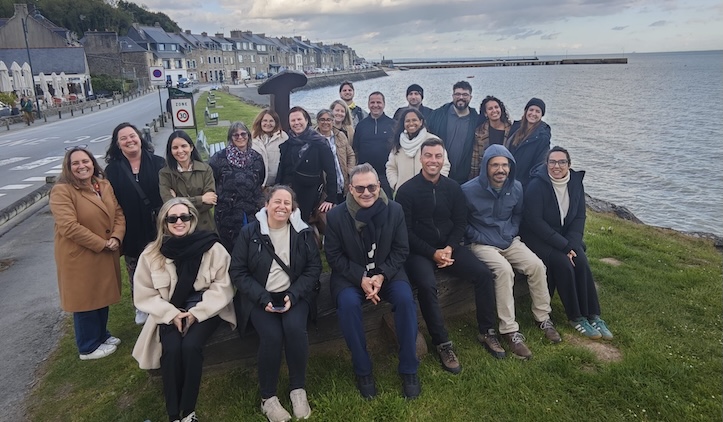
Three days of exchanges and innovation around the valorization of marine resources
On April 14, 15 and 16, 2026, Institut Agro Rennes-Angers welcomed the partners of the AquaFish0.0 project for three days dedicated to collaboration, innovation and knowledge sharing. Through project meetings, sensory analyses, field visits and public conferences, the event highlighted the project’s progress as well as future opportunities for the development of sustainable and innovative seafood products.
Day 1: Steering committee and tasting session
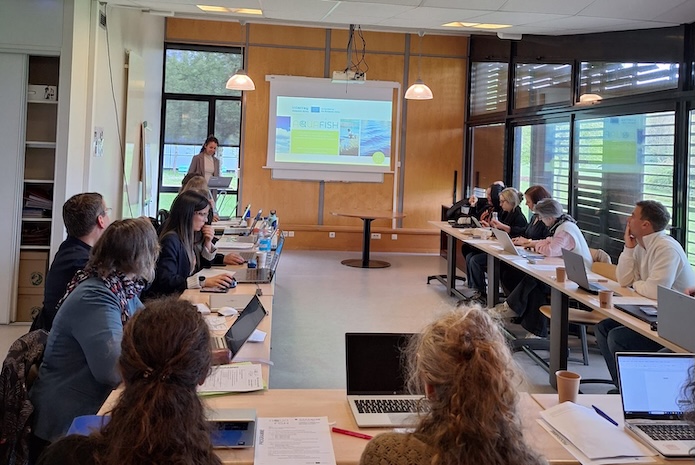
The first day began with a steering committee meeting gathering the project consortium partners. Discussions focused on project management, progress achieved in the different work packages, and communication strategies to maximise the dissemination and impact of the project results.
At lunchtime, participants enjoyed an original sea cucumber tasting prepared on site by chef Yannick STROTTNER. This convivial experience provided a concrete illustration of the gastronomic potential of still underutilised marine resources.
The afternoon continued with a visit to the heritage library on the Institut Agro campus, followed by a transnational tasting panel organised in the sensory analysis laboratory. The session was completed with a sensory analysis of abalone from the Concarneau pilot project, carried out by Institut Agro students.
At the end of the day, participants discovered the historical heritage of Rennes during a guided tour of the city centre.
Day 2: Field visits and industry discoveries
The second day continued the steering committee activities, with a particular focus on the remaining tasks for each partner and on the project’s final communication strategy. Discussions addressed key project messages, dissemination channels and evaluation indicators.
Lunch at the restaurant Le Ciel showcased seafood products alongside algae-based plant products, highlighting the complementarity between marine resources and sustainable food innovation.
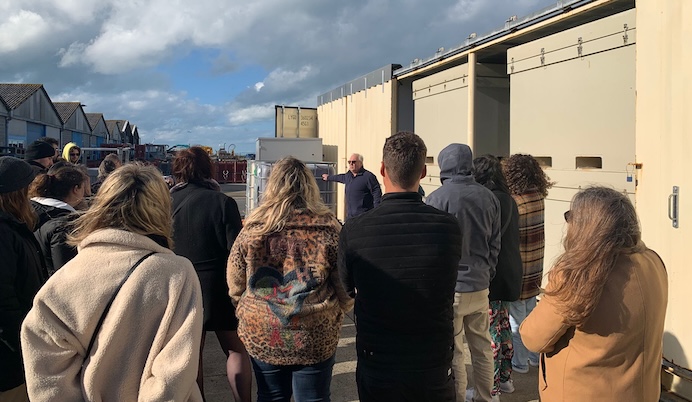
The afternoon was dedicated to company visits. Participants visited Agriloops, a pioneering company developing circular aquaponic systems combining shrimp farming and vegetable production. They then discovered the facilities of Cultimer, which has developed an innovative project focused on the valorisation of undersized mussels through advanced processing equipment.
The day concluded in Cancale, the Breton capital of oysters.
Day 3: A public event dedicated to the future of sustainable seafood products
The third day, open to the public, provided an opportunity to present the main outcomes of the project.
Project partners shared their work on the analysis of biomass derived from fisheries and aquaculture by-products, as well as the opportunities for the economic and food valorisation of these resources.
Discussions also focused on the new products developed within the project and on lessons learned from the different pilot projects.
A session dedicated to environmental and economic challenges then addressed food safety considerations, economic feasibility, and marketing strategies required for the successful launch of these products on the market.
Further discussions explored the social acceptance of sustainable aquaculture and fisheries products. Speakers examined ways to encourage consumers to try new products and adopt lesser-known seafood species.
Following lunch and a virtual reality video game demonstration, the afternoon featured two thematic round tables.
The first session, moderated by Sylvie Thoby, focused on processing innovations and new products derived from seafood co-products. Presentations by Mytilimer, LEGRIS and Le Panier de la Mer demonstrated the potential for valorising undersized mussels, oysters and underutilised fish species.
The second round table, moderated by Sterenn Lucas, addressed strategies to improve consumer acceptance of undervalued seafood products. Discussions brought together several stakeholders from the seafood sector, including Sea Rennes, Poiscaille, France Filière Pêche and E.Leclerc.
A European dynamic supporting the food transition
These days confirmed the importance of cooperation between research institutions, companies and seafood sector stakeholders in developing innovative and sustainable solutions. By promoting the valorisation of marine co-products and underutilised species, the project contributes to a more efficient use of aquatic resources and actively supports the transition towards more sustainable food systems.
AQUAFISH 0.0 is a project funded by ERDF through the INTERREG Atlantic Area 2021-2027 programme (project code EAPA_0062/2022).