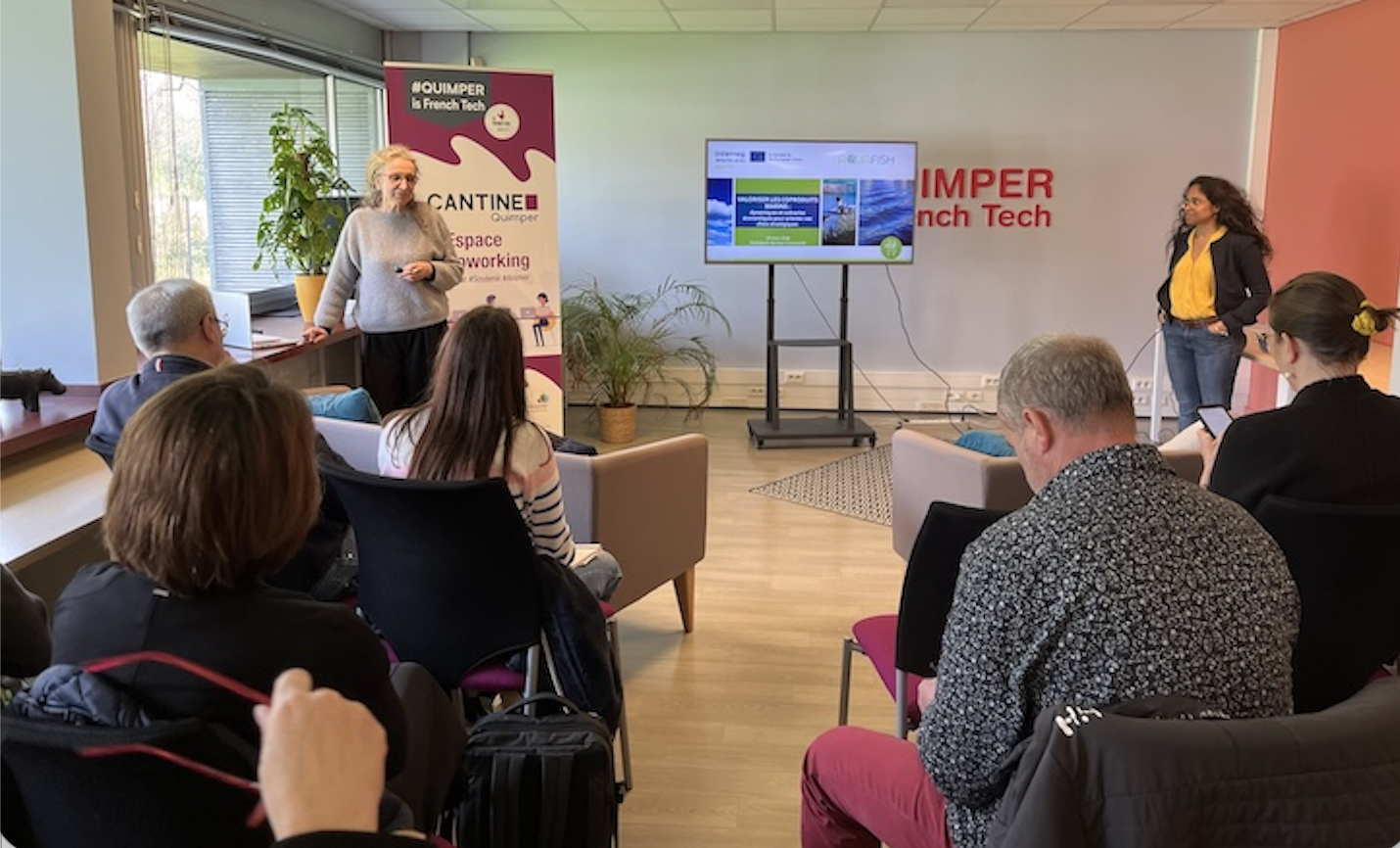
Marine By-Product Valorization: A strategic opportunity for the Atlantic blue economy
The economic and marketing analysis, combined with European cooperation dynamics, has now translated into measurable progress for the Aquafish project, directly benefiting businesses in the sector.
An Underutilised Economic Potential
Based on the expertise of Upcyclink Bretonn company, the economic study we carried out, proposes concrete scenarios, based on 14 real-world business plans, and underscores a critical insight: valorization depends primarily on economic and industrial structuring, not just technology. A decision-support tool has also been developed to guide businesses. Designed as a “go/no-go” filter, it quickly assesses the valorization potential of by-products based on company-specific factors: volumes, infrastructure, investments, or target markets. Currently being tested with volunteer companies, it aims to bridge the gap between intention and action by identifying the optimal scenario for each business.
A Vital Marketing Strategy
Institut Agro, as well as a group of four students, led a study on marketing strategies to optimize the economic valorization of marine by-products. Three key levers stand out: anti-waste argument (through educational campaigns), health benefits (lean proteins from fish trimmings, omega-3 from liver) and CSR commitment (local partnerships and compliance with sustainable regulations). A three-tier pricing approach, based on functional value rather than low-cost positioning, is recommended. The communication plan relies on educational storytelling, promoting nutritional benefits, and collaborations with chefs to integrate by-products into culinary practices. The ultimate goal: fostering a circular economy while meeting consumer demand for sustainability and innovation.
Workshops with Businesses to Share and Engage
Workshops were organized in France to exchange with businesses and mobilize the sector around the study’s findings:
- On 24 March 2026, a workshop at Technopole Quimper brought together stakeholders from the fishing and agri-food industries. The fourteen participants analyzed market dynamics, shared concrete feedback, and explored operational avenues, while addressing acceptability challenges (marketing positioning, storytelling, sustainable resource valorization). The other three partner countries will soon host similar events.
- On 16 April in Rennes, following the transnational meeting on 14-15 April, a professional day organized by Institut Agro allowed for the sharing of preliminary results and the strengthening of synergies across the Atlantic Arc, with 70 attendees. Another event is planned in October in Portugal to present the project’s full findings.
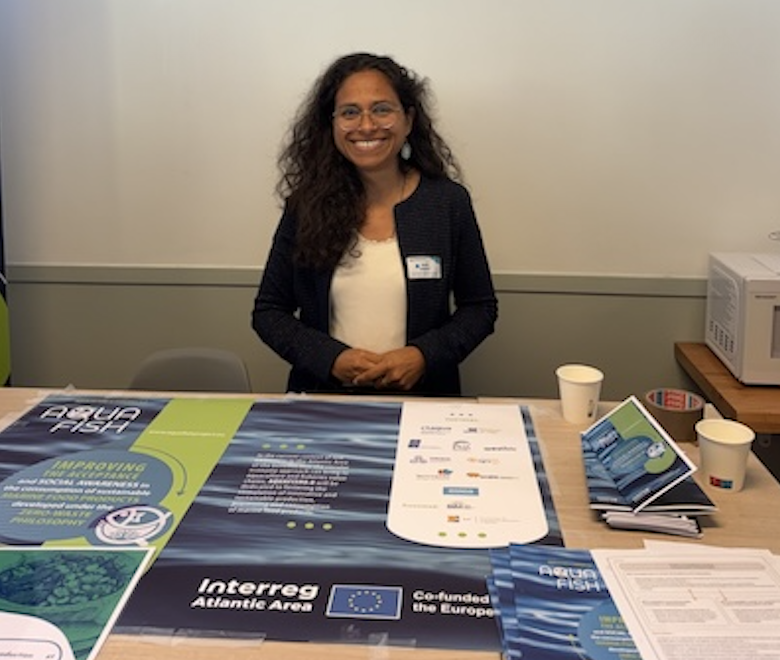 - During the Professional Day on Marine Resources in Guingamp, organized by Anticipa in May, the economic study’s results were presented to the sector, alongside a dedicated Aquafish project stand. The event gathered 125 participants (in-person and remote).
In Brittany, companies and the ecosystem show strong interest in these studies, with several participants eager to test the decision-making tool once it is released. It is encouraging to see that companies are sensitive to the circular economy and open to valorizing their by-products, but this also reveals their need for support in this process.
AQUAFISH 0.0 is a project funded by ERDF through the INTERREG Atlantic Area 2021-2027 programme (project code EAPA_0062/2022).